
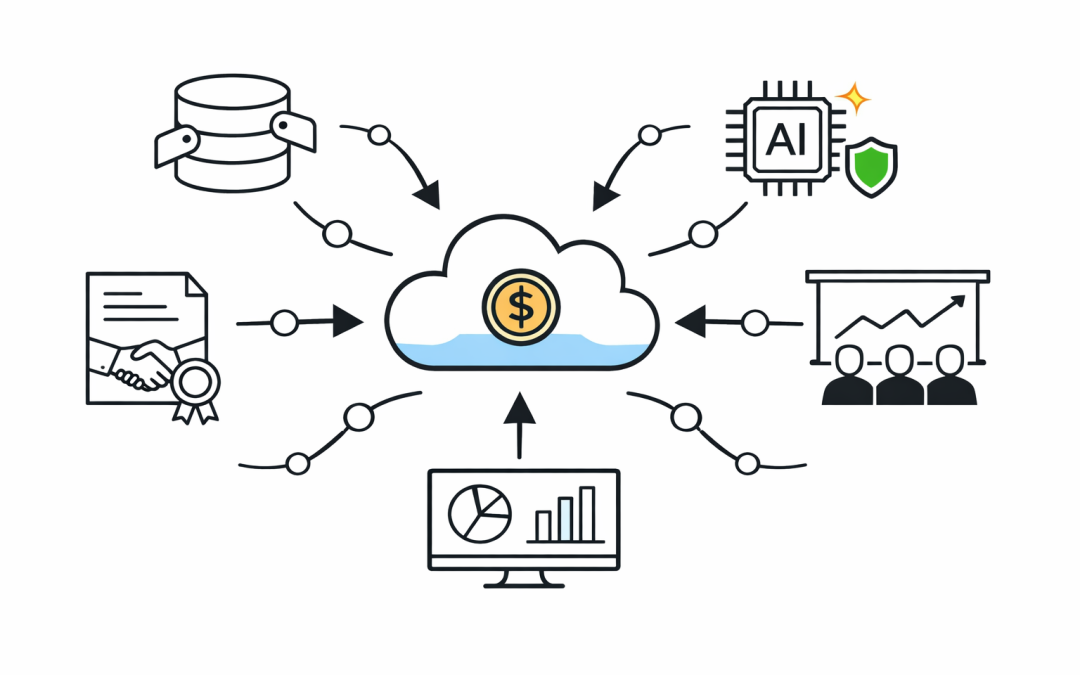
Cloud cost has returned to the top of the CIO priority list. Budgets are tighter, AI workloads are expensive, and boards are asking harder questions about return on cloud investment than they were two years ago.
Microsoft has been steadily refreshing its cost optimisation guidance across the Azure Well-Architected Framework, the Cloud Adoption Framework, and the FinOps toolkit. The material is genuinely useful. It also stops short of what most Australian mid-market organisations actually need to get cloud spend under control.
Why Cloud Cost Is Back in the Spotlight
The post-pandemic cloud build-out is now being audited. Many organisations lifted and shifted quickly, signed generous commitments, and layered AI pilots on top of existing Azure estates without a disciplined cost model.
Three pressures are now colliding at once.
The first is macroeconomic. Interest rates, currency movements, and flat IT budgets mean every dollar of cloud spend is being scrutinised by finance teams that were previously happy to approve consumption-based invoices without pushback.
The second is AI. Azure OpenAI, Copilot, and agent workloads bring a new class of variable cost that does not behave like traditional infrastructure. Token consumption, GPU-backed inference, and retrieval pipelines can move spend in directions that finance and engineering leaders have never had to forecast before.
The third is board-level pressure. CIOs are being asked to show measurable value from cloud and AI, not just migration progress. That turns cost optimisation from an engineering hygiene task into a strategic reporting obligation.
What Microsoft’s Latest Guidance Gets Right
Microsoft’s Well-Architected Framework Cost Optimisation pillar and the FinOps toolkit have matured significantly. For Australian organisations running primarily on Azure, the guidance covers the fundamentals well.
Reservations, savings plans, and Azure Hybrid Benefit are documented clearly, with realistic guidance on when each mechanism applies. The FinOps toolkit provides accelerators for cost allocation, tagging hygiene, and Power BI-based reporting that most internal teams would take months to build from scratch.
The Cloud Adoption Framework now treats cost management as a governance discipline rather than a one-off cleanup exercise. That framing is correct. Cost optimisation is not a project. It is an operating model.
Microsoft has also published more prescriptive guidance on optimising AI workloads, including right-sizing model deployments, using provisioned throughput units appropriately, and applying caching patterns to reduce token spend. For organisations starting their AI cost conversations, it is a credible baseline.
Where the Guidance Falls Short for Mid-Market Organisations
The gap is not in the content. It is in the assumptions behind it.
Microsoft’s cost optimisation material implicitly assumes a mature FinOps function, a dedicated cloud centre of excellence, and engineering teams with the capacity to act on recommendations. Most Australian mid-market organisations with 50 to 500 employees do not have any of those things.
They have a lean IT team, a stretched cloud lead, and an Azure estate that grew organically over several years. Reading a Well-Architected assessment is easy. Acting on fifty recommendations across subscriptions, resource groups, and workload owners is not.
There is also a blind spot around commercial structure. The guidance focuses heavily on technical levers inside Azure but offers far less on enterprise agreement negotiation, CSP partner arrangements, and the trade-offs between direct, indirect, and partner-led purchasing models. For many mid-market organisations, the biggest single cost lever is the contract, not the configuration.
Finally, AI cost guidance is still maturing. Microsoft can tell an organisation how to deploy Azure OpenAI efficiently, but it cannot tell the business whether a given Copilot rollout is actually returning value. That question sits outside the framework.
What a Practical Cost Programme Looks Like in 2026
A defensible cloud cost programme in 2026 combines Microsoft’s technical guidance with disciplines the guidance does not cover directly.
It starts with visibility. Tagging, cost allocation, and chargeback or showback need to be real, not aspirational. Without clean allocation, every other conversation becomes a debate about whose spend is whose.
It continues with commitment management. Reservations and savings plans should be reviewed on a rolling basis against actual consumption, not signed once and forgotten. For AI workloads, provisioned throughput commitments need their own review cycle because usage patterns change quickly.
It includes contract strategy. Enterprise agreements, CSP arrangements, and Microsoft incentive programmes should be evaluated against current and projected workloads, not the shape of the estate three years ago.
It treats AI spend as a separate discipline. Token budgets, model selection policies, and usage guardrails on Copilot and agent workloads belong in the cost conversation from day one, not after the first surprise invoice.
And it closes the loop with the business. Finance, procurement, and executive leadership need regular, plain-language reporting on what cloud is costing and what it is returning. That reporting is what turns cost optimisation from an IT activity into a board-level capability.
The CloudProInc View
Microsoft’s cost optimisation guidance is a credible starting point, and every Australian organisation running on Azure should be using it. Our team works with mid-market clients who have read the documentation, run the assessments, and still find themselves overspending on cloud and under-reporting on value.
The difference between organisations that close that gap and those that do not is rarely technical. It is operational discipline, commercial literacy, and the willingness to treat cost as a continuous programme rather than an annual cleanup.
For CIOs who want cloud cost under control before the next board cycle, Microsoft’s guidance is the map. The programme that turns it into measurable outcomes is the work.
If cloud cost is back on your agenda and the current programme is not moving fast enough, our team can help benchmark your Azure estate, pressure-test your commitment strategy, and build a cost operating model that fits a mid-market reality.
Discover more from CPI Consulting
Subscribe to get the latest posts sent to your email.