
The way software gets built is changing — fast. OpenAI’s expanded Codex platform, now powered by GPT-5 and deeply embedded across terminals, IDEs, and cloud environments, represents more than an incremental upgrade. It signals a fundamental shift in how engineering teams will operate over the next two to three years.


For mid-market organisations running lean development teams, this shift creates both opportunity and risk. The opportunity is extraordinary productivity gains. The risk is falling behind competitors who adopt these tools first.
Here is what the Codex expansion means in practice, and how leadership teams can position their engineers to benefit.
What Changed with OpenAI’s Codex Expansion
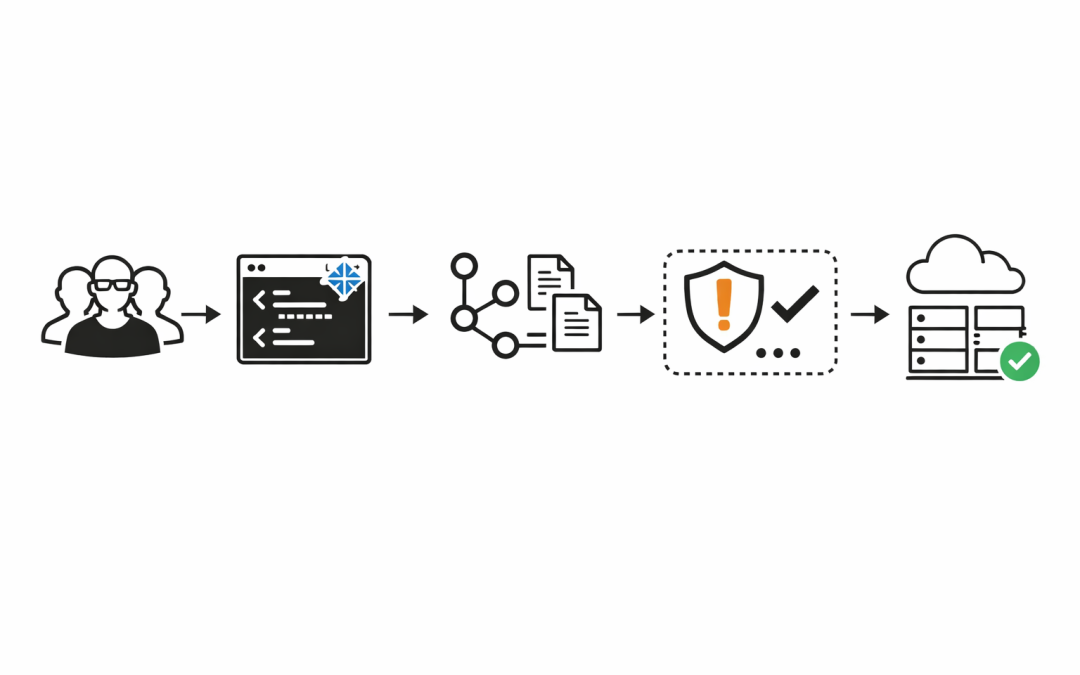
OpenAI’s Codex has evolved from a code-completion tool into a full agentic coding platform. The latest iteration, GPT-5-Codex, can autonomously write code, debug issues, generate and run tests, conduct code reviews, and manage multi-file refactors — all without constant human supervision.
The numbers are difficult to ignore. OpenAI reported at DevDay 2025 that engineers using Codex complete 70 percent more work each week. Task completion times in cloud workflows have been reduced by up to 90 percent. These are not theoretical projections — they reflect real usage data from teams already embedded in the platform.
Three capabilities stand out for enterprise teams:
- Agentic autonomy. Codex can now work independently on long-running tasks for hours, iterating through code, fixing failures, and re-running tests until the job is done.
- Cross-environment continuity. Engineers can start work locally in a terminal, hand off to the cloud for asynchronous execution, and pick up results later — all with shared context.
- Automated code review. Codex can be tagged in GitHub pull requests to provide instant, structured feedback aligned with team-specific guidelines defined in an AGENTS.md file.
Why This Matters for Mid-Market Engineering Teams
Large enterprises have dedicated platform engineering teams to evaluate, integrate, and govern new tools. Mid-market organisations rarely have that luxury. Engineering teams of 10 to 50 developers often wear multiple hats — shipping features, maintaining infrastructure, and managing technical debt simultaneously.
This is precisely where AI coding agents deliver the most relative value. A team of 15 developers augmented by Codex does not just get marginally faster. It gets structurally more capable. Routine tasks like writing boilerplate, fixing lint errors, generating test coverage, and reviewing pull requests can be offloaded to the agent. This frees senior engineers to focus on architecture, system design, and the complex problem-solving that actually moves the business forward.
The competitive dynamic is straightforward. Organisations that integrate these tools effectively will ship faster, maintain higher code quality, and retain developers who prefer modern tooling. Those that delay will find themselves competing for talent and market share with one hand tied behind their back.
The Governance Question Most Teams Are Ignoring
Productivity gains mean nothing if they introduce unacceptable risk. This is where many organisations stumble — they rush to adopt AI coding tools without establishing the guardrails that make adoption sustainable.
OpenAI has built meaningful security controls into Codex. Code runs in sandboxed environments by default. Internet access is opt-in with domain allowlisting. Prompt injection monitoring is built into the agent pipeline. Enterprise plans include admin controls, audit logging, and Slack integration for monitoring.
But platform-level security is only half the equation. Organisations need their own governance layer:
- Acceptable use policies that define which tasks can be delegated to AI agents and which require human review.
- Code review workflows that treat AI-generated code with the same scrutiny as human-authored code.
- Data classification rules that prevent sensitive business logic or proprietary algorithms from being processed through external AI services.
- Measurement frameworks that track not just velocity gains but also defect rates, security vulnerabilities, and technical debt accumulation.
Without these guardrails, the productivity gains from AI coding tools can easily be offset by quality and security incidents that erode stakeholder trust.
Five Steps to Prepare Your Engineering Team
Preparing for this shift does not require a massive transformation programme. It requires deliberate, sequenced decisions that build capability without disrupting delivery.
1. Start with a Controlled Pilot
Select a non-critical project or internal tool and deploy Codex with a small team of two to four developers. Measure task completion time, code quality metrics, and developer satisfaction over a four-week sprint. Use the pilot to identify workflow friction points before scaling.
2. Define Your AGENTS.md Early
OpenAI’s AGENTS.md file allows teams to encode their coding standards, architectural patterns, and review expectations directly into the agent’s context. Defining this early ensures AI-generated code aligns with existing conventions from day one rather than creating a cleanup burden later.
3. Establish a Review and Governance Framework
Before expanding adoption, document clear policies on AI-assisted development. Specify which environments Codex can access, what data classifications are off-limits, and how AI-generated pull requests are reviewed. Treat this as a living document that evolves with the team’s experience.
4. Invest in Developer Enablement
AI coding tools amplify existing skills — they do not replace the need for strong engineering fundamentals. Invest in training that helps developers write effective prompts, interpret AI-generated code critically, and understand the boundaries of what these tools can and cannot do reliably.
5. Align Engineering Leadership with Business Outcomes
The conversation about AI coding tools should not live exclusively within the engineering team. CIOs and CTOs need to frame adoption in terms of business outcomes — faster time to market, reduced maintenance costs, improved developer retention — and secure the budget and executive support needed to sustain the initiative.
The Window for Early Advantage Is Closing
AI-assisted development is no longer an experiment. It is becoming the baseline expectation for competitive engineering organisations. The teams that move now — with discipline, governance, and a clear enablement strategy — will compound their advantage over the next 12 to 18 months.
The teams that wait for the tools to mature further will find that their competitors have already redefined what “mature” looks like.
At CPI Consulting, our team works with mid-market organisations across Australia to navigate exactly this kind of technology transition. From evaluating AI development tools to building the governance frameworks that make adoption sustainable, we help engineering leaders move with confidence rather than caution. If your organisation is exploring how AI coding agents fit into your development workflow, reach out for a conversation — no pressure, just clarity.
Discover more from CPI Consulting
Subscribe to get the latest posts sent to your email.