
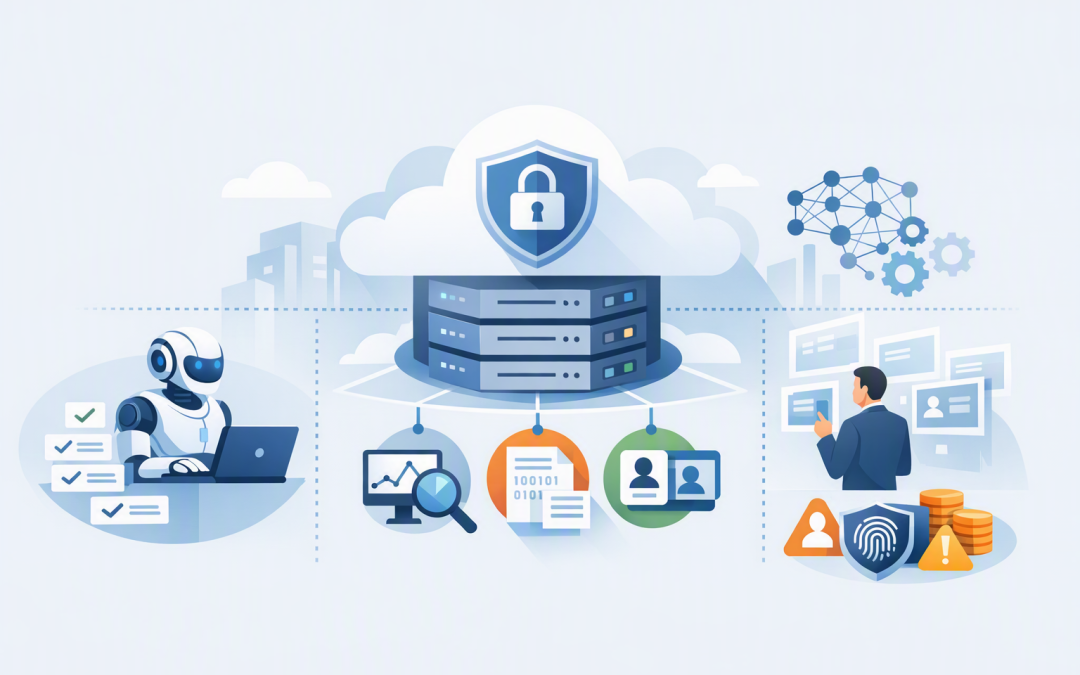
In this blog post What Azure AI Agent Server GA Means for Enterprise AI Agents we will explain why the general availability milestone matters, how the technology works, and what technology leaders should check before putting an AI agent into a live business process.
Many organisations can build an impressive AI agent demonstration. The problems start when that agent needs to serve hundreds of employees, access sensitive systems, remember previous work and recover when something goes wrong.
Azure AI Agent Server helps close that gap. At a high level, it gives custom AI agent code a standard way to run inside Microsoft Foundry Agent Service, while Microsoft manages much of the supporting infrastructure needed for security, identity, scaling, sessions and monitoring.
What became generally available
Microsoft announced the general availability of hosted agents in Foundry Agent Service on 9 July 2026. General availability, usually shortened to GA, means the managed hosting service is supported for production use rather than being positioned as an experimental preview.
There is an important distinction here. Hosted agents are the managed Azure service. Azure AI Agent Server provides the hosting foundation and communication protocols that let your code operate within that service.
Individual language packages, framework integrations and newer features may still have their own preview status. Technology leaders should therefore assess the complete design rather than assuming every component became production-ready at the same time.
How Azure AI Agent Server works
An AI agent is software that can interpret a request, use an AI model to decide what to do, access approved tools or information, and complete a multi-step task. Unlike a basic chatbot, it may query a database, create a support ticket or call a business application.
Your developers can build this logic using Microsoft Agent Framework, LangGraph or custom code. We covered the application layer in Build Production AI Agents with Microsoft Agent Framework and .NET.
Azure AI Agent Server then exposes that agent through a consistent interface. In plain English, it gives other applications a standard and controlled way to send work to the agent and receive the result.
User or business application
 ↓
Dedicated Foundry agent endpoint
 ↓
Azure AI Agent Server protocol
 ↓
Your agent logic and approval rules
 ↓
Approved AI models, data and business tools
 ↓
Monitored response or business action
The Responses protocol is designed for conversational and OpenAI-compatible interactions. The Invocations protocol supports more customised requests, such as a webhook from a finance, operations or service management system.
When deployed, each hosted agent receives a dedicated Microsoft Entra identity. Entra is Microsoft’s identity and access platform, and the dedicated identity allows the agent to receive specific permissions without storing passwords or sharing a broad service account.
The platform can also maintain session state, preserve working files, scale the required computing resources and collect activity traces. A trace is a record of the steps the agent took, including model requests and tool calls, which helps teams investigate failures and unexpected behaviour.
Why GA matters to the business
Less time spent building infrastructure
Before hosted agents, teams often had to assemble container hosting, identity, storage, monitoring, scaling and session management separately. Every extra component increased delivery time and created another service that someone had to secure and maintain.
A managed runtime allows engineering teams to spend more time on the business workflow. The outcome should be faster delivery and lower ongoing support costs, provided the service fits the organisation’s requirements.
Better separation between users and sessions
Hosted agents use session-based isolation, meaning one user’s working files and conversation state can be kept separate from another user’s session. This matters when an agent handles customer records, employee information or commercially sensitive documents.
Isolation does not replace good application design. Your agent code must still verify who the user is, what they are allowed to access and whether information should be retained.
More controlled access to business systems
A dedicated identity makes least-privilege access more practical. Least privilege means giving the agent only the permissions required for its job, rather than unrestricted access to an entire system.
This supports the intent of the Essential Eight, the Australian Government’s cybersecurity framework that many organisations use to reduce common security risks. However, deploying on Azure does not automatically make an agent Essential Eight compliant.
Improved visibility when something fails
A production agent needs more than an uptime dashboard. Leaders need to know which tools it called, how much each task cost, whether users are receiving accurate results and where human intervention was required.
Built-in tracing and connection to Azure monitoring services make that oversight easier. It becomes possible to compare agent versions, investigate incidents and identify tasks that consume excessive model capacity.
More freedom to choose the right framework
Hosted agents can run custom code rather than limiting organisations to prompt-only assistants. This gives teams more control over approval steps, system integrations, models and business rules.
For organisations already evaluating Microsoft Agent Framework, our article on what Microsoft Agent Framework means for real-world AI delivery explains how the development framework fits into the wider platform.
A practical business scenario
Consider a 200-person professional services company receiving repetitive IT requests after hours. Employees need help finding approved instructions, checking device compliance and creating support tickets with the right information.
A hosted agent could search the company knowledge base, check Microsoft Intune, which manages and secures company devices, and review alerts from Microsoft Defender. It could then provide approved guidance or create a properly categorised ticket for the support team.
The agent should not receive unrestricted administrator access. High-risk actions, such as resetting an account or changing a security policy, should require human approval.
The business outcome is not simply “having an AI agent”. It is shorter support queues, faster employee assistance and more consistent ticket information without weakening security controls.
What GA does not solve for you
General availability removes some platform uncertainty, but it does not make every agent safe, reliable or financially worthwhile. Your organisation remains responsible for the design of the workflow and the systems connected to it.
- Business continuity: Microsoft Foundry does not remove the need for backup, recovery and regional outage planning.
- Data handling: Review where prompts, files and tool data are processed, particularly when personal information is covered by the Privacy Act and Australian Privacy Principles.
- Access control: Separate read, recommendation and action permissions. An agent that can suggest a payment is less risky than one that can release it.
- Quality controls: Test the agent against realistic tasks, incorrect data, malicious instructions and unusual user requests.
- Cost management: Set budgets, usage alerts and limits for long-running tasks. Automatic scaling can reduce idle infrastructure but does not control model consumption by itself.
- Change management: Maintain version history and a tested rollback process so a poor update can be removed quickly.
These controls should be designed into the platform from the beginning. Our guide to designing secure AI agent infrastructure on Azure explores the identity, networking and governance questions in more detail.
A sensible path to production
- Select one measurable workflow. Choose a repetitive task with a clear owner, known inputs and an outcome you can measure.
- Map data and permissions. Document what the agent can read, where data travels and which actions it may perform.
- Keep high-risk actions behind approval. Begin with recommendations and drafts before allowing automatic changes.
- Test in a separate environment. Do not experiment against live customer, finance or identity systems.
- Monitor quality, security and cost. A successful answer rate alone does not show whether the agent is safe or economical.
- Expand only after proving value. Use pilot results to decide whether the next investment should improve the existing agent or address another workflow.
The real meaning of production-ready
Azure AI Agent Server and generally available hosted agents give businesses a more credible path from a local prototype to a managed enterprise service. The biggest benefit is not a smarter chatbot. It is reducing the amount of infrastructure work required to operate custom agents with controlled identities, persistent sessions and usable monitoring.
The organisations that benefit most will still be those that start with a business problem, limit access and measure results. Technology cannot compensate for an unclear process or an agent that has been given more authority than it needs.
CloudProInc is a Melbourne-based Microsoft Partner and Wiz Security Integrator with more than 20 years of enterprise IT experience across Azure, Microsoft 365, OpenAI, Claude and cybersecurity. If you are unsure whether an agent is ready for production, or whether hosted agents are the right deployment model, we are happy to review the design with you — no strings attached.
Discover more from CPI Consulting
Subscribe to get the latest posts sent to your email.