
NVIDIA announced NemoClaw at GTC 2026 on March 16. For most business leaders, the name means nothing yet. Within 12 months, it will be part of every enterprise AI conversation.
NemoClaw in Plain Language
NemoClaw is an open source stack that makes it possible to run autonomous AI agents — software that can plan tasks, use tools, and work independently — with built-in security and privacy controls. It installs with a single command and runs on hardware ranging from a laptop to a dedicated AI workstation.
The important part for business leaders isn’t the technology itself. It’s what it represents: NVIDIA is now building the safety and governance layer for AI agents, not just the chips that power them.
Why This Matters Beyond IT
AI agents are different from the chatbots and copilots most organisations have experimented with. A chatbot answers a question when asked. An agent takes a goal, figures out how to achieve it, and works autonomously — potentially for hours or days — to deliver a result.
That autonomy creates real business value. An agent can monitor systems around the clock, process documents without human intervention, or coordinate tasks across multiple platforms. But it also creates real risk. An agent with access to business systems, credentials, and data can cause significant damage if it behaves unexpectedly.
NemoClaw exists because the industry recognised that agent capability has outpaced agent governance. The agents are ready. The infrastructure to trust them in a business environment has been missing.
The Three Things Business Leaders Need to Understand
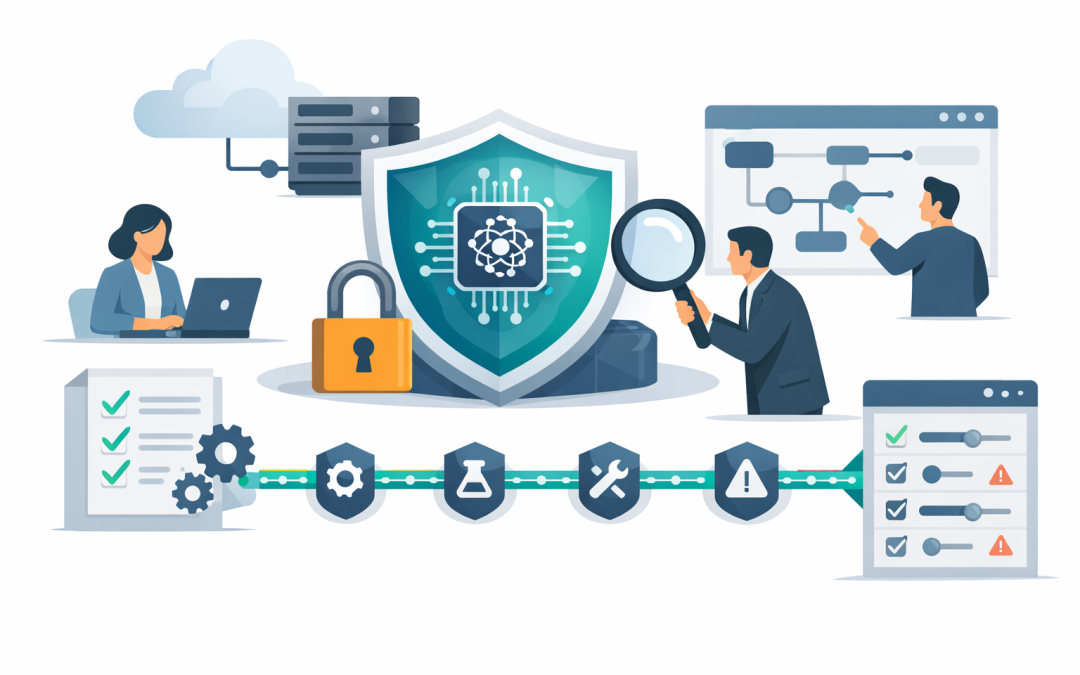
1. Security enforcement sits outside the agent. Most current AI safety measures work by telling the AI model what not to do — essentially relying on the agent to police itself. NemoClaw’s OpenShell runtime takes a fundamentally different approach. It wraps the agent in an external governance layer that controls what the agent can access, which network requests it can make, and which tools it can use. The agent cannot override these controls because they don’t live inside the agent.
For business leaders, the analogy is straightforward: it’s the difference between asking an employee to follow a policy and building the policy into the system so the employee couldn’t break it even if they wanted to.
2. Sensitive data can stay on-premises. NemoClaw includes a privacy router that decides where AI processing happens based on organisational policy. Routine tasks can be handled by open models running locally on the organisation’s own hardware. Only tasks that require more powerful cloud-based models send data externally — and only when the policy explicitly allows it.
For Australian organisations subject to the Privacy Act and operating under ACSC guidance, this hybrid approach addresses the most common objection to AI agent adoption: “where does our data go?”
3. The major SaaS platforms are already building on this. Salesforce, ServiceNow, Atlassian, SAP, Box, and Adobe are all integrating with NVIDIA’s Agent Toolkit, which includes the same OpenShell runtime that powers NemoClaw. This means the agent governance model NVIDIA is establishing will show up inside the platforms most mid-market organisations already use.
What This Changes for Mid-Market Organisations
For organisations with 50 to 500 employees, NemoClaw shifts the agent conversation from “should we?” to “how do we govern it?”
The security vendors are already moving. Cisco AI Defense, CrowdStrike, Microsoft Security, and TrendAI are all building integrations with OpenShell. When the security tools an organisation already uses start providing agent-specific controls through a shared runtime, the adoption path becomes much clearer.
The practical implication is that agent governance is no longer something each organisation needs to build from scratch. An open source, vendor-supported governance layer — backed by the security and platform vendors most businesses already work with — is now available.
The Questions to Ask Now
Before the next board meeting or technology review, business leaders should be asking three questions.
First, which of our current software platforms are adding agent capabilities, and what governance controls do they include?
Second, do we have a policy for where AI processing happens — on-premises, in the cloud, or a hybrid approach — and who decides?
Third, if an AI agent acting on behalf of the organisation makes an error or causes a data breach, do we have an audit trail that shows exactly what happened and why?
NemoClaw doesn’t answer all of these questions on its own. But it establishes the framework within which the answers will be built. And for mid-market Australian organisations, understanding that framework now — before agent adoption accelerates across the platforms they rely on — is the difference between leading the transition and scrambling to catch up.
CloudProInc helps mid-market organisations across Australia navigate AI platform decisions, including agent governance and security architecture. If NemoClaw and the broader agent platform shift are new territory, a structured evaluation is the right starting point.